Saturday, February 28, 2015

Walking the Way of the Cross


This past Friday, I was given the opportunity to lead people in the Stations of the Cross.  The devotion was held at St. Mary Star of the Sea Church, in downtown Beverly, MA.  The church is old, big, the interior cavernous.  Even with the lights on, it seemed dark inside.  The old furnace has a hard time heating the church, so there was a bit of a chill in the air.  We had about 30 individuals attending the service.  I came out into the sanctuary, dressed in my alb and purple deacon stole.  And for the first time, a wireless microphone; the interior of St. Mary’s soaks up sound, even my loud voice.  I invited those in the pews to join me in walking the Way the Cross; after a short prayer, we began.

This devotion has a long history.  Most scholars credit the Franciscan Friars with establishing the Way of the Cross in its present form.  The Franciscans had already been given responsibility for the Holy Places in the Holy Land, by the Pope.  In Jerusalem, the friars would lead pilgrims through the streets, along the route Jesus would have walked to Calvary.  During the 15th and 16th centuries, Franciscans in other countries began to set up outdoor shrines, imitating the places (or stations) where Jesus would have stopped on His way to His crucifixion.  Later, they requested, and received papal permission to set up Stations of the Cross in their churches.  It was not long afterward, that Rome extended that permission to bishops who wished to also set up Stations in their own churches.
 
The Way of the Cross is a devotion that helps us Christians to remember that Jesus, though the Son of God, was also human; that for Him, the Way of the Cross was a journey into suffering and death.  Realizing this, as I walked and prayed each of the Stations, I found myself entering into a different spiritual space, a solemn space, a sorrowful space.  Sorrowful, because I was sensing the pain and suffering that Jesus went through for us.  For us, He was willing to totally empty Himself, give all that He had on the Cross, so that we would be freed from the power of sin and death.  How often do we forget that?  The Way of the Cross helps us to remember. 

The devotion also reminds us that if we decide to follow Christ, we follow Him everywhere, even to Calvary.  If we follow Him, it means that we are willing to empty ourselves in service to Him, and our brothers and sisters in Christ.  First to empty ourselves of our selfishness, our pride, our self-centeredness, anything that gets in our way of loving God and others.  Then we empty ourselves of our talents, our skills for the sake of Christ, and the world.  It is not easy; it can be very hard and painful.  Still, Jesus Christ calls us to follow; but if we answer that call, we can be assured that we will not be alone on this journey.  Christ assures us that though the journey may be full of suffering, Easter dawn awaits.


After the Station where Jesus in laid in the tomb, I walked to a large bas relief in the church.  It portrays the Resurrection, and standing before it, I read a passage from the Gospel of Luke (24: 1-8), where the women find the empty tomb.  And two men appear before them and announce:  “He is not here; he has arisen!”  On that note of hope, I stood before altar, and blessed those who are in the church, turned and bowed before the Eucharistic Presence in the tabernacle, and left the sanctuary. 

Monday, February 23, 2015

Reflection on the Readings for the First Sunday of Lent - 2015


Genesis 9:8-15
Psalm 25: 4-5, 6-7, 8-9 (10)
1 Peter 3: 18-22
Mark 1: 12-15


The story of Noah and the Ark has in many ways has become a child’s fairy tale.  Most depictions of the story look like a cartoon, showing friendly animals, lining up two by two, to enter the Ark.  We see Noah and his family, smiling as they welcome the creatures coming towards them.  Yet, like most of our modern fairy tales, the origin of the story of the Ark; the deeper meaning of the story, can be grim and frightening.

We see God, looking out at the humanity that inhabits His world and seeing only evil and corruption.  Like a potter, unhappy with the pottery he has made, God intends to destroy His creation, wipe the slate clean.  Yet, God is a creator, not a destroyer.  While He intends to wipe out the evil, He sees the good that still exists, exists in Noah and his family.  So God saves a remnant of humanity, and insures their survival.  And Noah and his family, humanity is reborn, life begins again.  And the Creator promises never to destroy all humanity again, and the rainbow is the sign of that promise.  He will seek another way to save His people from the power of sin. 

And that way is found in Jesus Christ, the Son of God, who, through His death and resurrection, freed all humanity, past, present, and those yet to come from, from the power, and consequences of sin.  And with that freedom, with the fulfillment of the promise the Father made to His creation, the “kingdom of God is at hand.” 

This is the Good News that Jesus is calling us to accept and believe.  To believe that God does love this world, loves us; loves us so much He gave us His Son to save us, to heal us.  That kind of love calls for a response from us, and that response is to change our lives, to follow the teachings of Jesus Christ, to live the Gospel!

The season of Lent is meant to be a time of preparation, a time of reflection, a time of conversion.  A reflection on what our lives have been, and to see, in light of the Gospel, what needs to be changed.  And we prepare our hearts to be open to experience the joy, and wonder of Easter morning, to celebrate the love of God

Wednesday, February 18, 2015

Reflection on Ash Wednesday - 2015


Joel 2: 12-18
2 Corinthians5: 20-6:2
Matthew 6: 1-6, 16-18

“Even now, says the Lord, return to me with your whole heart, with fasting, and weeping, and mourning; rend your hearts, not your garments, and return to the Lord, your God.”  (Joel 2: 2-13)


In the frozen, snowbound Commonwealth of Massachusetts, the celebration of Ash Wednesday goes on.  I have been assisting at two Masses, and one service, distributing the ashes; marking each person’s forehead with the sign of the cross (or at least, I am trying to!).  Each time, I tell the person: “Repent, and believe in the Gospel.”  I am encouraging them to hear, and accept, the Good News, and to change their lives.   Ashes on the forehead are an ancient symbol of repentance, from the time of ancient Israel, and further back in time.  But it is only a symbol, it has no power, it has no meaning, if the recipient does not commit himself or herself to living the teachings of Jesus Christ. 

Now this requires change; a change in the way we live our lives.  It is a call to enter into a closer, more loving, and a deeper relationship with our God.  It is a call to let go of our selfishness, our self-centeredness, and reach out the Father; and to reach out to each other, friend and stranger alike.  It is a call to let go of the bad self image we can have of ourselves; and realize that God love us for who and what we are, no matter how bad.  And we are called to reach out to the other wounded persons we meet, and share this Good News, whether by word, and by action. 

Lent then, is the season wherein we can enter into a more disciplined way of life, with the aim of growing closer to God.  We are encouraged to make even more time for prayer, where we open our hearts, to let God in, so that we can experience that Love that surpasses all other types of love.  And as our experience of that Love grows and grows, we are impelled to make more and more room in ourselves for God’s Presence.  We need to discover what is our internal clutter, that personal junk, which is getting in our way of loving God.  This is where the discipline of fasting comes in, where we can discover what we really need to live, and what we can do without.  Where we can discover how it feels to be empty, and ready for Christ to come, and knock at the door of our hearts.  Finally, receiving such a great gift from the Father, we feel the need to share that gift of love with others, others who maybe alone, feel unloved, who believe they are alone in a cruel dark world.  By practicing almsgiving, we learn to reach beyond ourselves, and touch those around us, whether they are family, friends or strangers.  And we learned that we are not just called to share from our “surplus,” but to share ourselves totally with others.

The season of Lent has been, is, and always will be an opportunity to deepen our commitment to the Gospel of Jesus Christ.  An opportunity and it will be a challenge for all of us.  The challenge to grow in our faith and to no matter often we might fail, we pick ourselves up and begin again.  We will not be alone on this Lenten journey, Jesus will be us, inspiring us by His Word, and He strengthens us with His Body and Blood.  And on Easter morn, He will be there to welcome us, into a much more wonderful life.

Tuesday, February 10, 2015

Snow, Snow, Go Away!!


We are digging out of our third snowstorm in Massachusetts!  If I hear someone singing "Let it snow, let it snow, let it snow!"; I am going to lose it!


Saturday, January 31, 2015

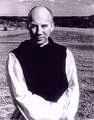
Thomas Merton, 100th Birthday of a Trappist Monk...And a Secular Franciscan?


Today, January 31, 2015, would have been the 100th birthday of Father Louis Merton, OSCO; better known to the world as Thomas Merton.  The Catholic, Christian blogosphere is abuzz with reports, stories, and reflections on the life of this Trappist monk, one I read on Crux, by Dennis Sadowski, of the Catholic News Service; another by Margery Eagan, On Spirituality columnist for Crux, and finally a very moving post by Father Dan Horan, OFM on his blog.

I do not know how many will share this opinion, but I think of Thomas Merton, as the one person who brought Christian spirituality, especially contemplative spirituality to the modern American Catholic population.  After him, I think we see an increase in the number of books on spirituality, and prayer, geared for the Catholic laity, and new authors, like Thomas Keating, M. Basil Pennington, Richard Rohr, and Emilie Griffin. I know for myself, my spiritual life became much deeper, more enriched by reading his writings.  He showed me a path to walk, and encouraged me to seek out other spiritual fathers and mothers, for inspiration and guidance.

I am still discovering new things about Merton, especially as heretofore unpublished journals, books, and essays are becoming public.  This has given a much more rounded view of Merton, his life, his struggles, and his achievements. Now there are some facts that I was not aware of until I recently read Father Dan Horan, OFM book on Merton, was that Thomas Merton had some deep Franciscan roots.  After his conversion to Catholicism, he felt a call to the Order of Friars Minor, and had applied to the Order, and was initially approved to enter into formation as a friar.  Before he was to enter, something happened; scholars are not completely sure what, that caused Merton to withdraw his application.  Still attracted to Franciscanism, he found himself at the Franciscan university, St. Bonaventure’s, in western New York.  There, he joined the faculty as an instructor in English.  It was during his time there, that he became a member of the Third Order of St. Francis, now known as the Secular Franciscan Order.  This bit of information floored me.  Now I knew that Merton had a Franciscan connection.  When I was once a Franciscan novice myself, and attended some summer classes at St. Bonaventure’s, I daily would look up at a hillside clearing, known as “Merton’s Heart.”  But to learn that Merton had been a Secular Franciscan, “Wow!”

Of course, this brings a whole bunch of questions: what fraternity did he belong to?  Is the fraternity still in existence?  Is the fraternity’s register, with his name listed in it, still available?  Did he attend monthly fraternity meetings, or was he an isolated tertiary, attached to a fraternity, but unable to make the meetings?  Maybe someday, some scholar, maybe even a Secular Franciscan, will be able to find answer to these questions.

I owe a debt of thanks to Father Louis, for prodding me to go ever deeper into my relationship with God.  May he rest in peace!

Thursday, January 29, 2015

A New Life of Saint Francis of Assisi by Thomas of Celano Discovered


The Franciscan world is abuzz with the word that another biography of St. Francis of Assisi, written by Thomas of Celano has been found.   A posting, dated January 27, 2015, on the English Speaking Conference ofthe Order Friars Minor (OFM) reported the details of how it was discovered.  Scholars believe that Thomas of Celano wrote it shortly after writing the First Life of St. Francis and way before he wrote the Second Life.  It is being reported that it contains information about Francis, which is missing from the other biographies; or had been changed in later issues. 

It is know that multiple biographies were written about the Saint, one only has to look at the three volume collection: “Francis of Assisi, The Early Documents,” compiled and translated by Regis Armstrong, OFM CAP, J.A. Wayne Hellmann, OFM CONV, and William Short, OFM.  That fact that we even have early versions for Francis’ biographies can be considered somewhat of a miracle.  When St. Bonaventure wrote his “Life of Saint Francis (Legenda Maior)” and presented it to a General Chapter of the Friars, the Chapter accepted it as the official biography, and for reasons that still remain unclear, ordered all copies of earlier biographies destroyed.  Again, I consider it a miracle that, according to Ewert Cousins, translator and editor of a collection of Bonaventure’s’ works; twenty copies of Celano’s first Life have survived, and only two copies of the second Life still exist.  Now another work by Celano has come to surface!  What new insights and revelations will come to light?  The Franciscan world waits in anticipation!

Tuesday, January 27, 2015

70th Anniversary of the Liberation of the Prisoners of Auschwitz


Today, January 27, 2015, is the 70th Anniversary of the liberation of the Auschwitz concentration camp by Soviet troops during World War II.  It is reported that 1.1 million prisoners died at Auschwitz, 90% of them were Jewish, and the remainder were prisoners from the rest of occupied Europe and the Soviet Union.  The BBC had a very moving report on the anniversary memorial at the camp.  New England has been hit by a record breaking blizzard, so the local news channels have been covering that story non-stop.  I have not been able to see any national news, so I do not know if this anniversary has been mentioned in American media.  I really hope it was, but I would not be surprised if it was not.

After learning about the atrocities the Nazis did to the Jews, and other peoples, the nations of the world cried out; “Never again!”  Yet we know that it has happened again, and again!  In my times, it has happened to the Cambodians, victims of the Khmer Rouge.  It has happened again among the ethnic peoples of the former Yugoslavia.  It is happening in Africa, whether among the ethnic tribes, from terrorist groups, or corrupt governments.  Genocide continues to happen, and all the world seems to do is wring its hands.

Growing up, I was never aware of the Holocaust, until one day a teacher in my high school, I cannot remember which class, showed us a black and white documentary film on the Holocaust.  It was the most powerful film I had ever seen, and I think it still shapes my thinking to this day.  In Boston, near Quincy Market, is a memorial to the Holocaust victims, glass columns shaped like the smokestacks of the concentration camps crematoria.  On each pane of glass are engraved the identification number tattooed on each prisoner of the camps.  When I worked in Boston, I would occasionally walk through the monument, touch the glass, and pray for the victims.  I pray that I will not forget, and I will not be silent.

Exalted and hallowed be God's great name
in the world which God created, according to plan.
May God's majesty be revealed in the days of our lifetime
and the life of all Israel -- speedily, imminently, to which we say Amen.

Blessed be God's great name to all eternity.

Blessed, praised, honored, exalted, extolled, glorified, adored, and lauded
be the name of the Holy Blessed One, beyond all earthly words and songs of blessing,
praise, and comfort. To which we say Amen.

May there be abundant peace from heaven, and life, for us and all Israel,
to which we say Amen.

May the One who creates harmony on high, bring peace to us and to all Israel.
To which we say Amen.

Kaddish